It’s a four hour flight from Hong Kong to Tokyo, and we then had to hang around the airport for a while getting our Japan Rail passes that we will use to travel around Japan over the next couple of weeks (you can only pick these up on arrival).
While waiting for the paperwork to get processed, I had a look at the nearby Tokyo metro ticket machines. They looked like a nuclear station control panel. Although they were printed in both Japanese and English, my brain was frazzled after a few minutes trying to decipher the instructions:

By the time we got to the hotel we were pretty tired, so we took the very soft option of eating in the hotel restaurant rather than venturing outside. Afterwards, we did go on a stroll to get our bearings – and our first view of the bright lights of this very big city. Our hotel was near the Ginza shopping district. This is the “high end” shopping section so thankfully the shops were closed!
DW had arranged an English speaking guide to show us some of the sights the next day. He started by bringing us into one of the metro stations, and explained how the ticket purchasing process works. It’s actually simple enough once you know what to do.
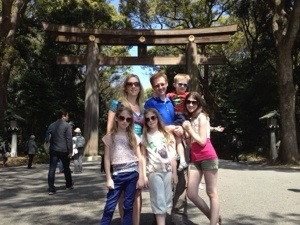
Our first stop was the Meiji shrine. This is the most visited shrine in Japan, but is only about 100 years old. It was built to commemorate Emperor Meiji. He reigned in the late nineteenth and early twentieth centuries. His reign saw the modernisation of Japan, the end of the shogun era of government and the switch of the capital from Kyoto to Tokyo.

Sake is considered a sacred drink in Japan. Inside the main gate into the shrine, there is a wall of (empty) sake casks that were donated by various sake breweries:
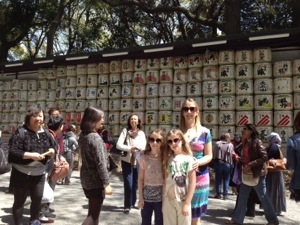
Meiji was instrumental in opening Japan up to the outside world after 300 years of isolationism (well, him, plus the very direct threat issued by American gunboats to open up for trade or else….). He used symbolism to help change the culture. So he wore his hair in the western fashion, wore western clothes, and sampled western food and drink. He was especially fond of French wine, so opposite the sake wall is a wall of empty Burgundy wine casks donated by various French wineries!
After Meiji shrine, we walked around the nearby teenage fashion mecca of Harajuku, Takeshita street. It was an interesting mix of goths, punks, lolitas, and others, all doing their best to pose in the spring sunshine. We stopped for lunch in that great home of international cuisine that is McDonald’s. Amazingly, even in McDonald’s, the entire menu was in Japanese with no English translation:

Outside of the large hotels, English is not widely spoken in Japan (unlike most other places on our trip so far). Trying to order plain hamburgers for the kids (no sauce, no lettuce, no tomato, no pickles – just beef and bun) was a challenge. We were thinking (a) thank goodness we have a guide with us and (b) how are we going to survive here for the next two weeks??
Our guide was a bit bemused by our lunch choice (kids driven of course). His clients usually want the authentic Japanese experience. It was his first MCD’s in over a year. Oh dear!
After our delectable lunch, we headed to another big shopping zone at Shibuya, with a stop along the way at a big toy shop called “Kiddyland” where The Boy picked up a small Lego set. Shibuya has a large multi-street junction where pedestrians mill across from all directions. I took a photo from inside the nearby train station:

The kids were tired by then so we called it a day on the sightseeing front. After relaxing at the hotel for a couple of hours, The Boy started up that he wanted to go back to the Lego shop. He was persistent so we decided what the hey, it’s his holiday too. We figured we’d attempt to get dinner on the same journey. So back we headed to Shibuya again (this time with no guide to help us with the metro tickets – we managed ok, yay!).
After picking up another small Lego set (he knows the “that’s too big” mantra by heart at this stage), we queued up to get into a conveyor belt sushi joint nearby. There were some tourists there, but it seemed to be mainly Japanese (of course, they may have been mainly Japanese tourists for all we know…). The nice thing about conveyor belt sushi is that you don’t actually need to be able to speak any Japanese to get fed – you just pick plates off the belt. But we did also manage to order a few dishes off the pictures menu they had!
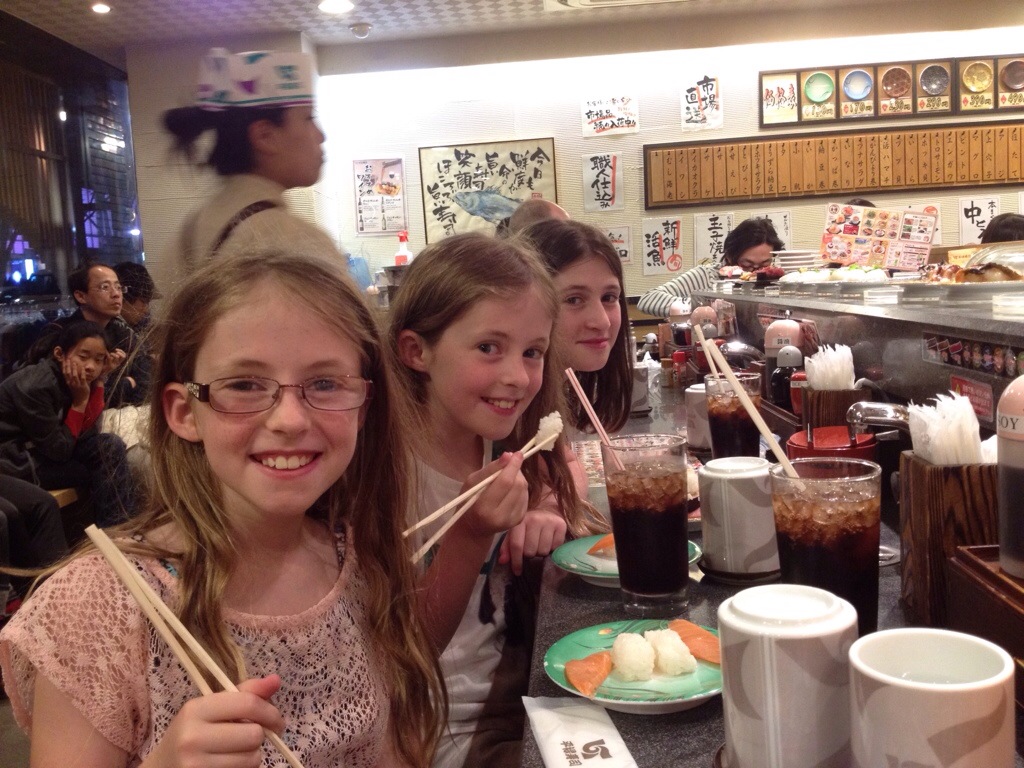
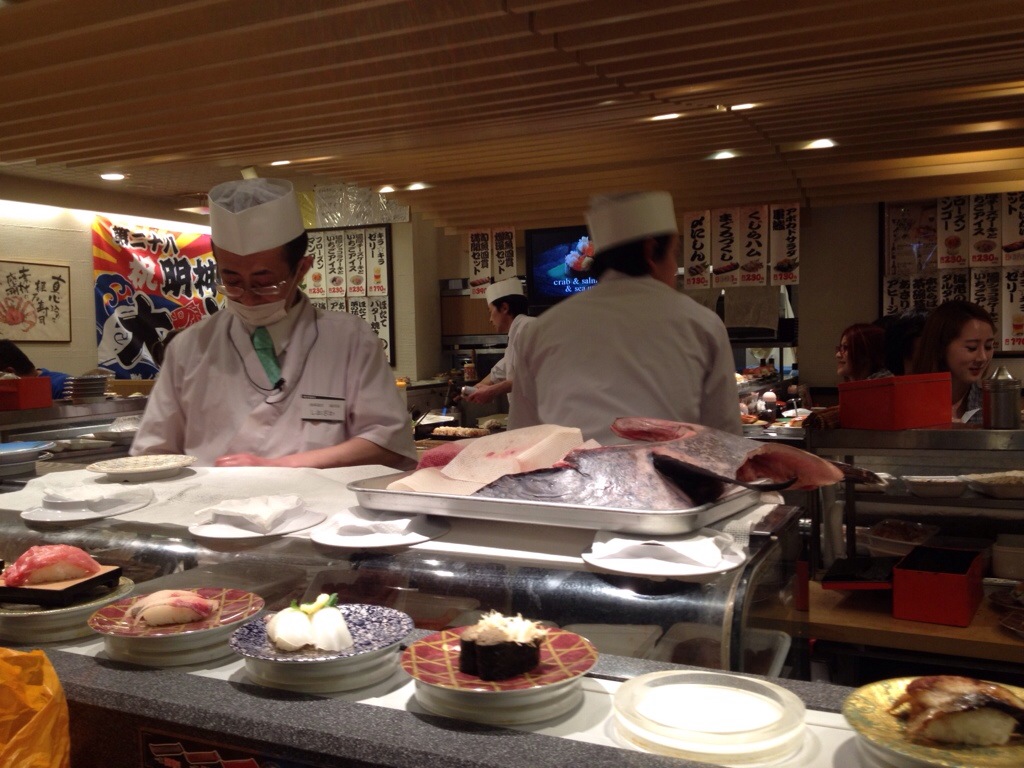
Fed and watered, we headed back to the hotel, feeling good that between room service and conveyor belt sushi we at least wouldn’t go hungry over our two weeks here.
The Boy fell asleep on the way home:

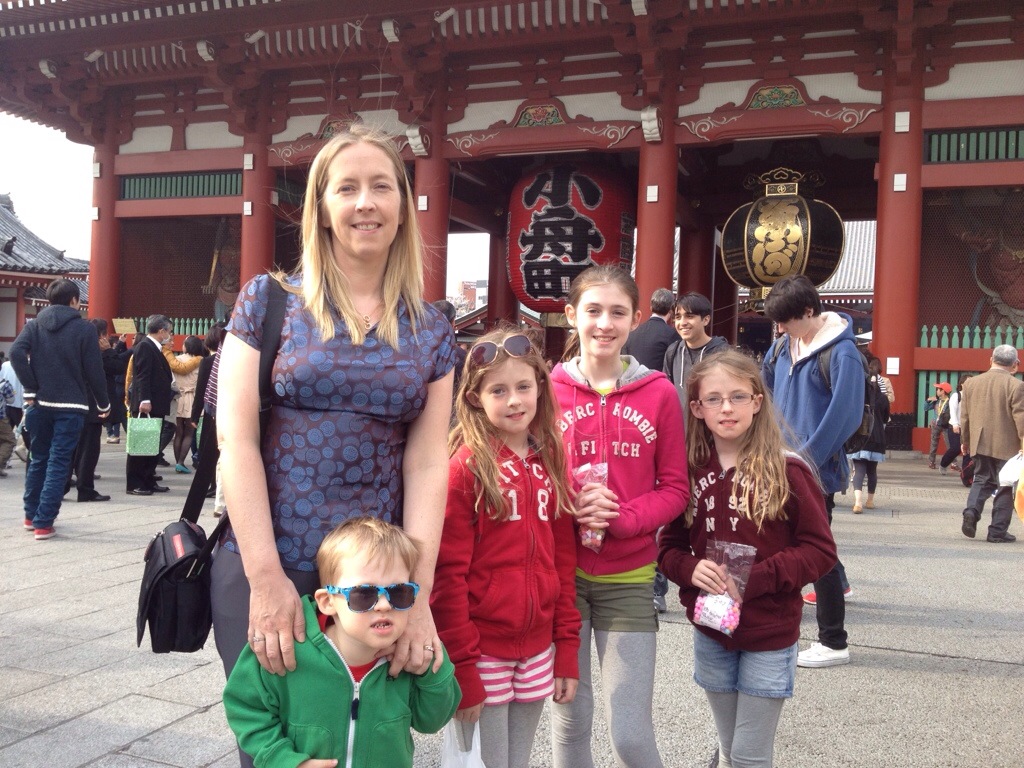
We only had a guide booked for one day, so we ventured off on our own over the remaining two days. After a very slow start on the first morning, we visited Senso-ji temple. While Meiji is a relatively new temple, Senso-ji is the oldest in the city, dating back to the seventh century. Also, Meiji is a Shinto shrine whereas Senso-ji is Buddhist. Most Japanese actually practice both religions. Shinto is the “native” religion to Japan, and is based around a belief that everything is sacred so there are many, many gods and a huge respect for all forms of nature. People tend to visit Shinto shrines at important times in the year to pray for good fortune – during the three day new year celebrations (to wish for prosperity in the year ahead), when coming up to exams, and so on.
Before we went in to the temple itself, we got tempted into taking a rickshaw ride around the area. When in Rome and all that – we’d been on tuk-tuks in Laos, cyclos in Vietnam and so now it was time for rickshaws in Japan!
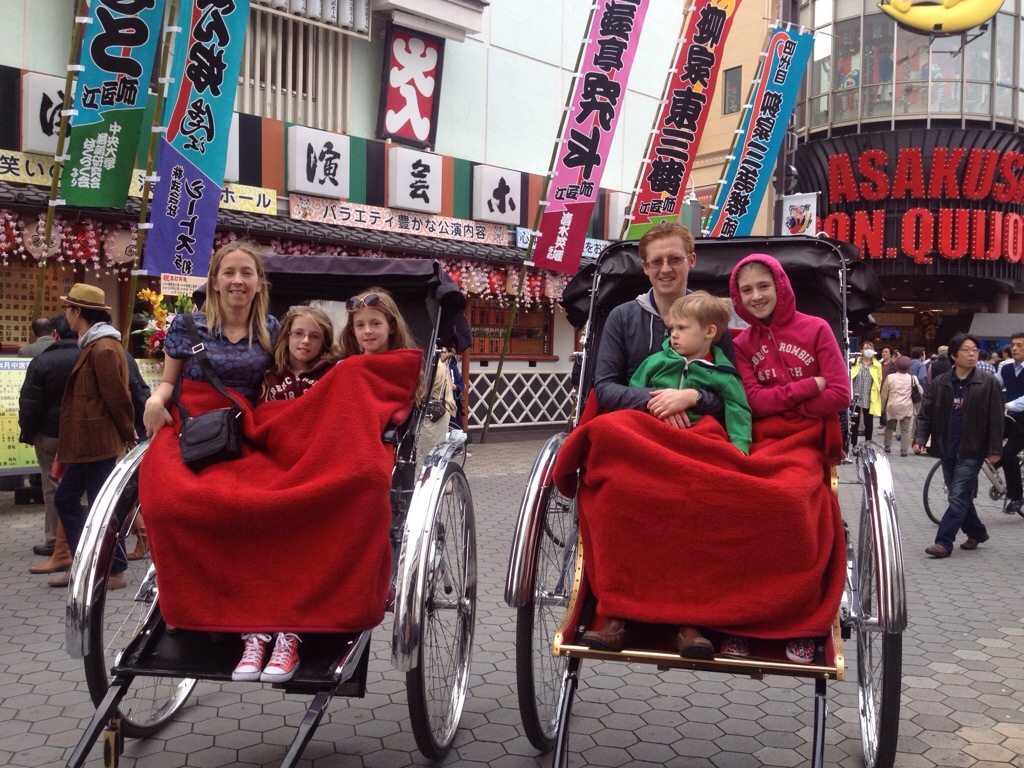
It’s not just a western tourist thing – honest! We saw lots of Japanese tourists taking them also, and even one wedding couple:

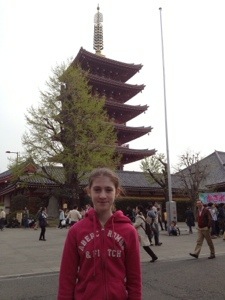
The temple itself was beautiful. Our of the main buildings there is a five-story pagoda, which is said to contain some of the ashes from the Buddha himself.

Afterwards, we visited another part of the city called Yanaka, which is an interesting contrast to the neon and skyscrapers elsewhere. Yanaka is an older residential district with many older, low-rise buildings and quiet streets. It also has many temples that were re-located here during a previous modernising phase downtown. Several of these appear to be in people’s back gardens.
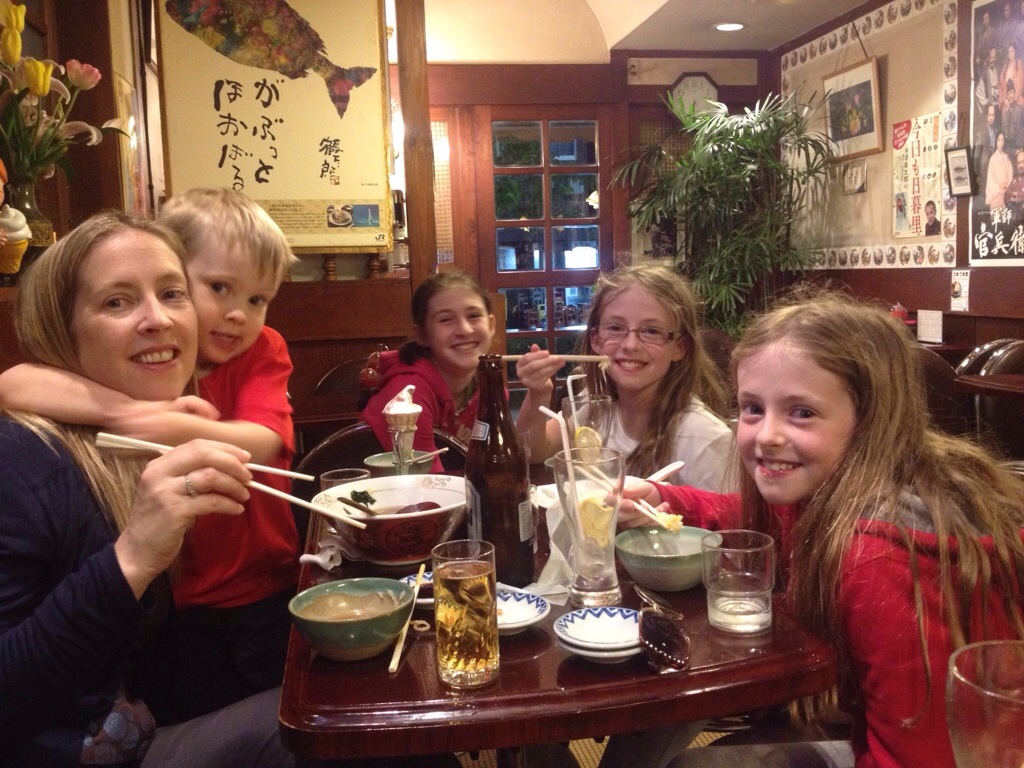
We decided to bite the bullet and venture into a local neighbourhood restaurant here for dinner. The elderly lady owner didn’t have a word of English, and we only had three words of Japanese (konnichiwa (hello), arigato (thank you) and sayanara (goodbye)). Her menu was entirely in Japanese. Thankfully, and like a lot of restaurants here, she had plastic models of the various dishes in her front window. So off we went outside and pointed at this dish and that, in the hope that some of them at least would be edible. It was delicious!
A couple of other shots from Yanaka:


After dinner, we headed to the local train station to get back home. Unlike in the downtown stations, the ticket board here was entirely in Japanese:
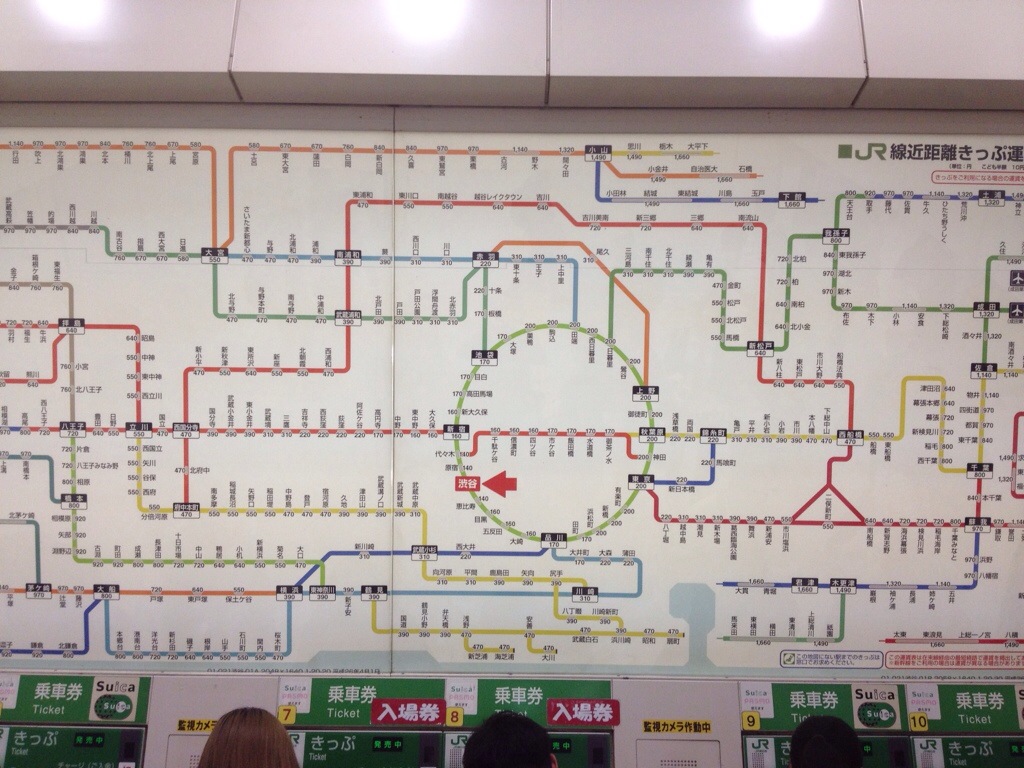
You use the board to work out how much to pay for your ticket. The red arrow shows you what station you’re at, you then look at the station you want to go to, and the price to there is listed underneath. As we couldn’t read the station names, we made a rough stab at where we were headed to, paid for the next highest priced ticket, and got on the train. We got back in one piece.
The next day we decided we’d start the day with a walk in the park next to our hotel (the Conrad Tokyo). The hotel overlooks a park that was originally laid out by one of the shoguns three hundred years ago. This is the view of it from our room:
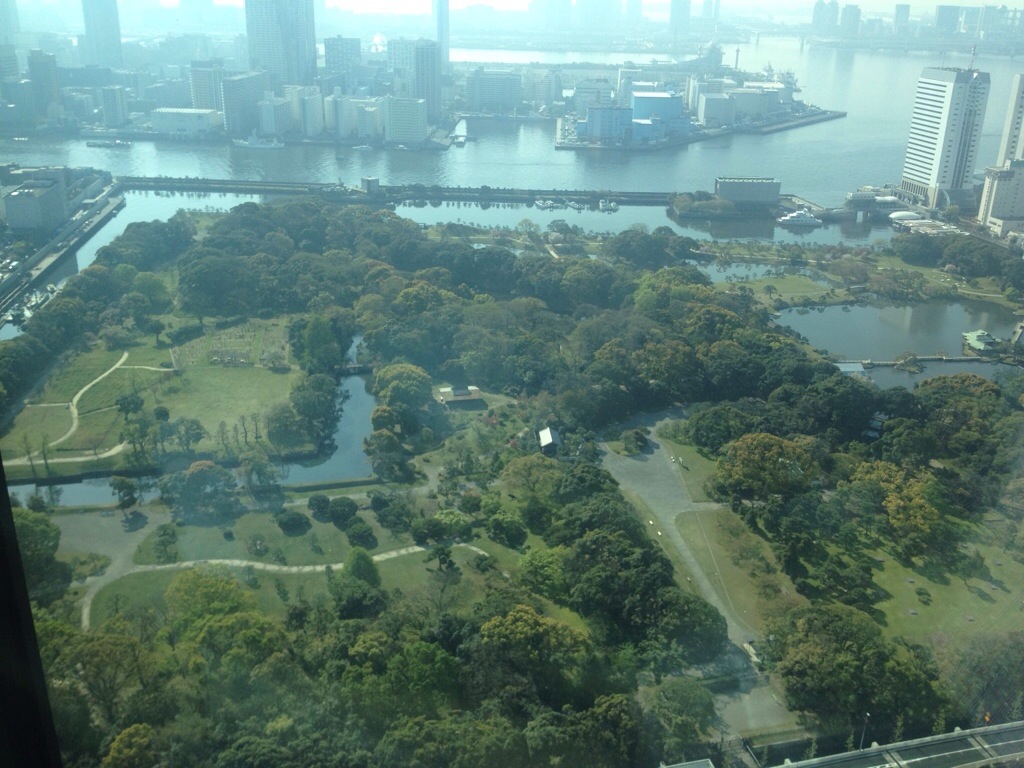
I’d been looking out at that view for the previous couple of days and really wanted to get a chance to stroll around that park, as it looked so pretty. It was.
One of the famous things about Japan is the cherry blossom season. The Japanese are fanatical about their cherry blossoms. They love the symbolism of these blossoms – they are very delicate, and only last a week or two before they are gone for another year. So for the Japanese, they represent the purity of life, and its fragility. So there are cherry blossom planted in all the major parks and in many other places too.
We knew when planning our trip that our dates meant we would miss the main season for viewing the blossoms, as it typically runs from late March to early April. But we’ve been pleasantly surprised to discover that there are still many blossoms around, typically of later blooming varieties, or of trees in shadier spots that bloom later. There were several dotted around the park which added to the scene. We also managed to get a shot in one spot that had the Tokyo Tower in the background. This is like a mini Eiffel Tower. It’s actually a tv broadcast tower, so it is definitely not a patch on the real Eiffel Tower, but it’s quite pretty and is one of the better spots to get up high for a view over the city. So that’s where we headed after the park.



On the way to the Tokyo Tower, we thought we could take a short cut through a shrine we came across on the way. It turned out to be a dead-end leading to a cemetery, but we did come across some very pretty statues with little knitted hats on them. I think these may be related to the cemetery in some way.

At the Tower, we only went halfway up as we wanted to make our way across town in time to make it to a slot we had booked in a mini-Legoland here (mainly for The Boy’s benefit). But we did get some fantastic views over the city, and through the viewing holes cut into the floor to let you see down to the ground from the viewing platform:

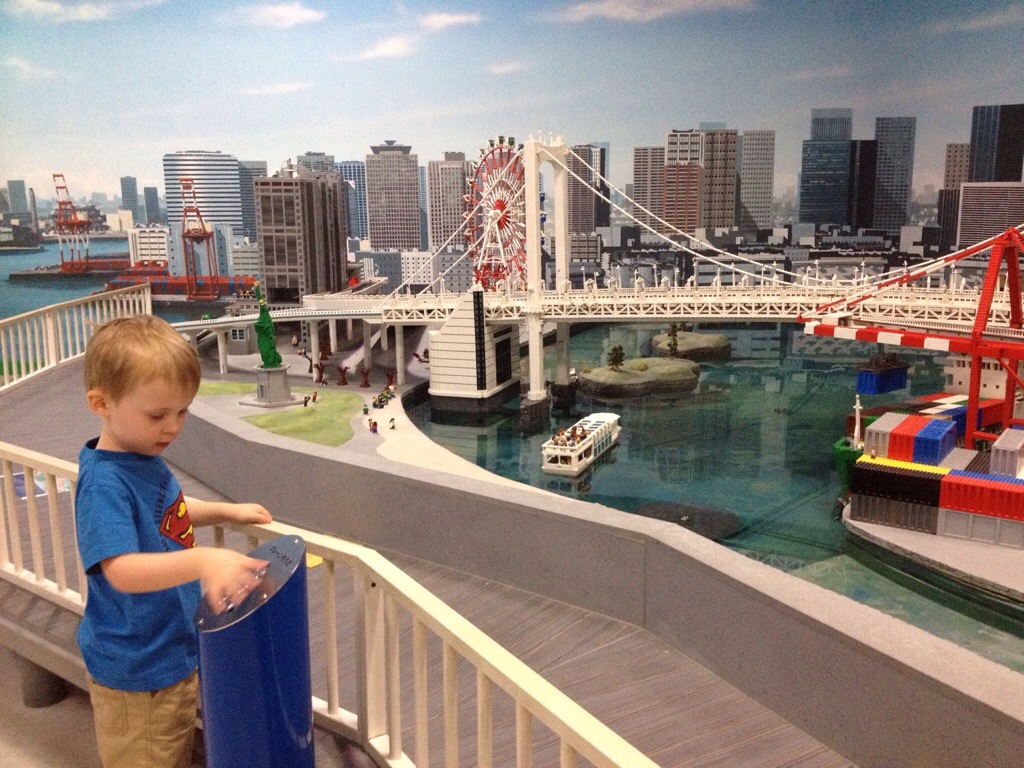
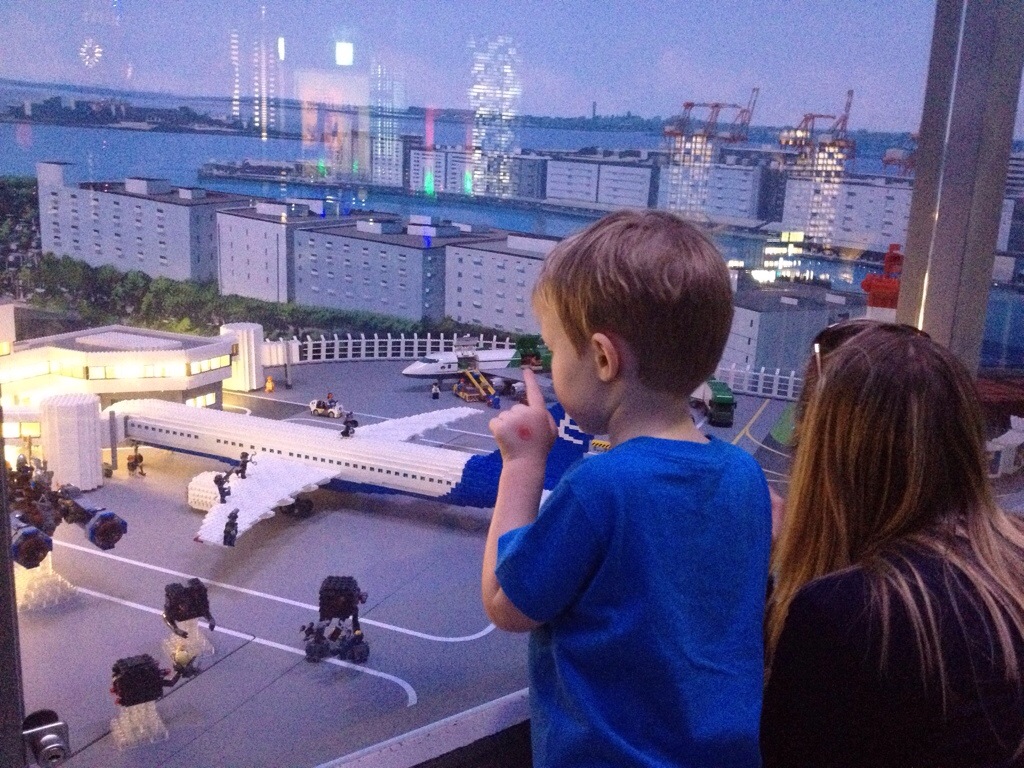
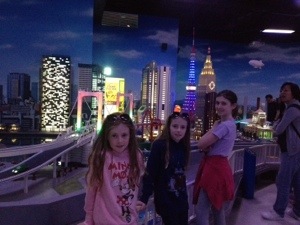
The mini-Legoland was tiny and all indoors. This is actually called a Lego discovery centre, so it’s not a patch on a proper Legoland like the one at Windsor near London. But it did have a couple of fun rides, a place to build Lego to your heart’s content, and a very nice mini world version of Tokyo. The Boy absolutely loved it – AND it had (another!) Lego shop at the end of your visit. So he got to pick up yet another small set. All these small sets are now seriously adding to the bulk of his and my shared suitcase. Hmm.


 craziesontour